
At the southern Albanian coast, Cape Stilo reaches out toward the sea, with the small Stillo Islet lying offshore. Together, they form a coastal landscape of steep rock, Mediterranean plant life and open water, very close to the coast between Albania and Greece. The cape is part of the wider landscape south of Butrint, while the islet sits just offshore, separated from the mainland by a short stretch of sea.
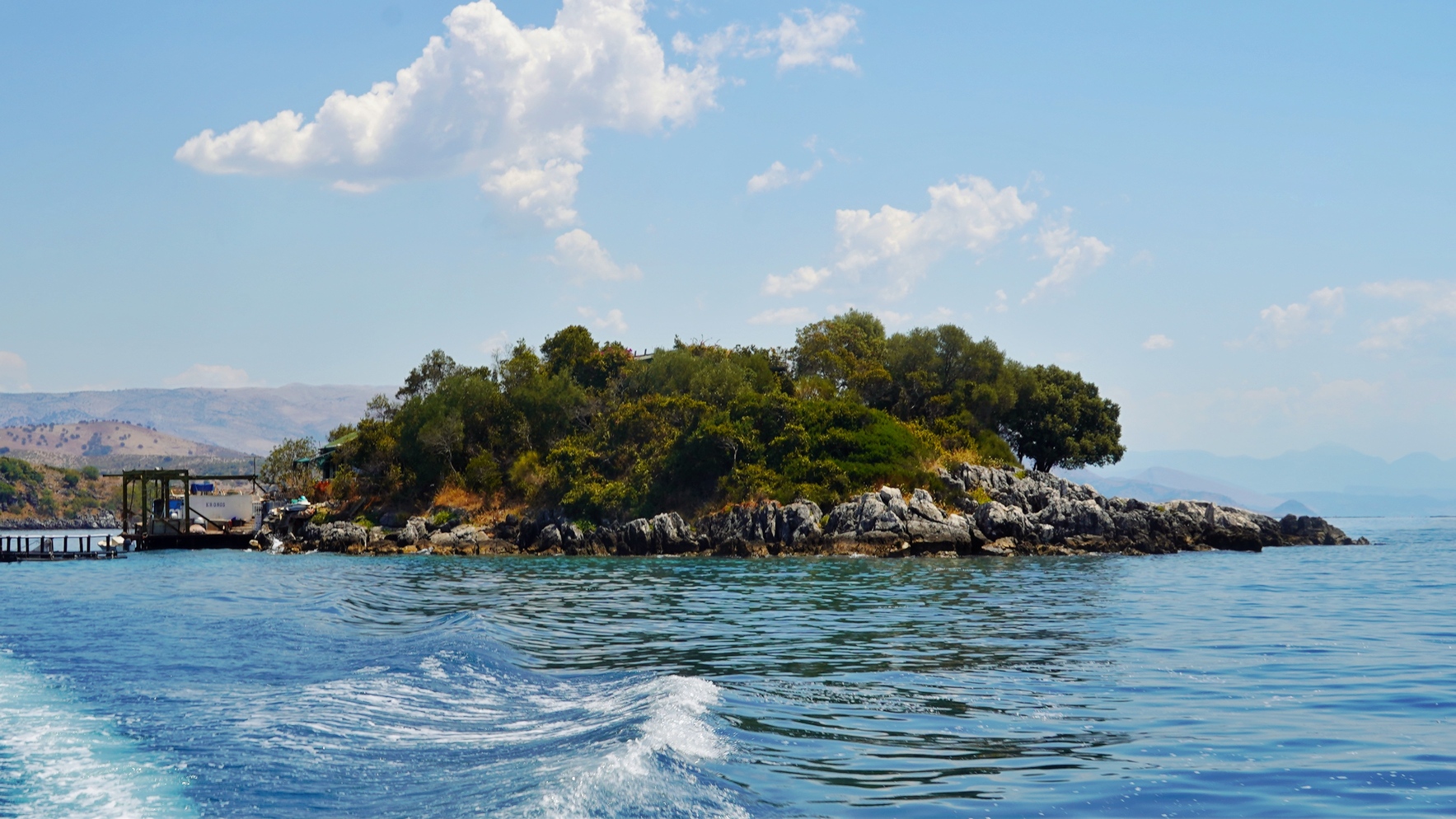
The most practical way to experience Cape Stilo and Stillo Islet as a destination is from the sea. Boat trips from the Sarandë and Ksamil area can reach this section of the coast, and local boat operators include Cape Stilo among their routes.
A land route also exists toward Cape Stilo from the Vrinë area, but for visitors coming specifically to experience the cape and the islet together, approaching by boat gives the clearest sense of the landscape and allows both parts of the destination to be seen from the water.
Because boat routes and availability can vary according to the season and weather conditions, these should be checked locally before travelling.
The landscape around Cape Stilo has a history that reaches much further back than its present-day appearance suggests. Archaeological research in the Korafi Hills identified a prehistoric fortified site on the cape, associated with a Bronze Age settlement. The hilltop position gave the site wide views toward the sea, the Vrina Plain and the area around Butrint. (butrintfoundation.co.uk)
Cape Stilo also became relevant much later in the history of the region. During the international negotiations over Albania’s southern border in 1913, the location was specifically discussed as a possible starting point for the Albanian-Greek boundary. The final decisions placed the border on the coast in Ftelia Bay, south of Cape Stilo. (akad.gov.al)
During the communist period, Cape Stilo and the surrounding coastal area were part of a restricted military zone. Its position at the southern edge of the Albanian coastline also gave the area a strategic role in the country’s coastal defence system. The restrictions associated with the military zone ended after the political changes of the early 1990s.
Today, the landscape can be experienced primarily from the sea, offering a very different perspective on this part of southern Albania.
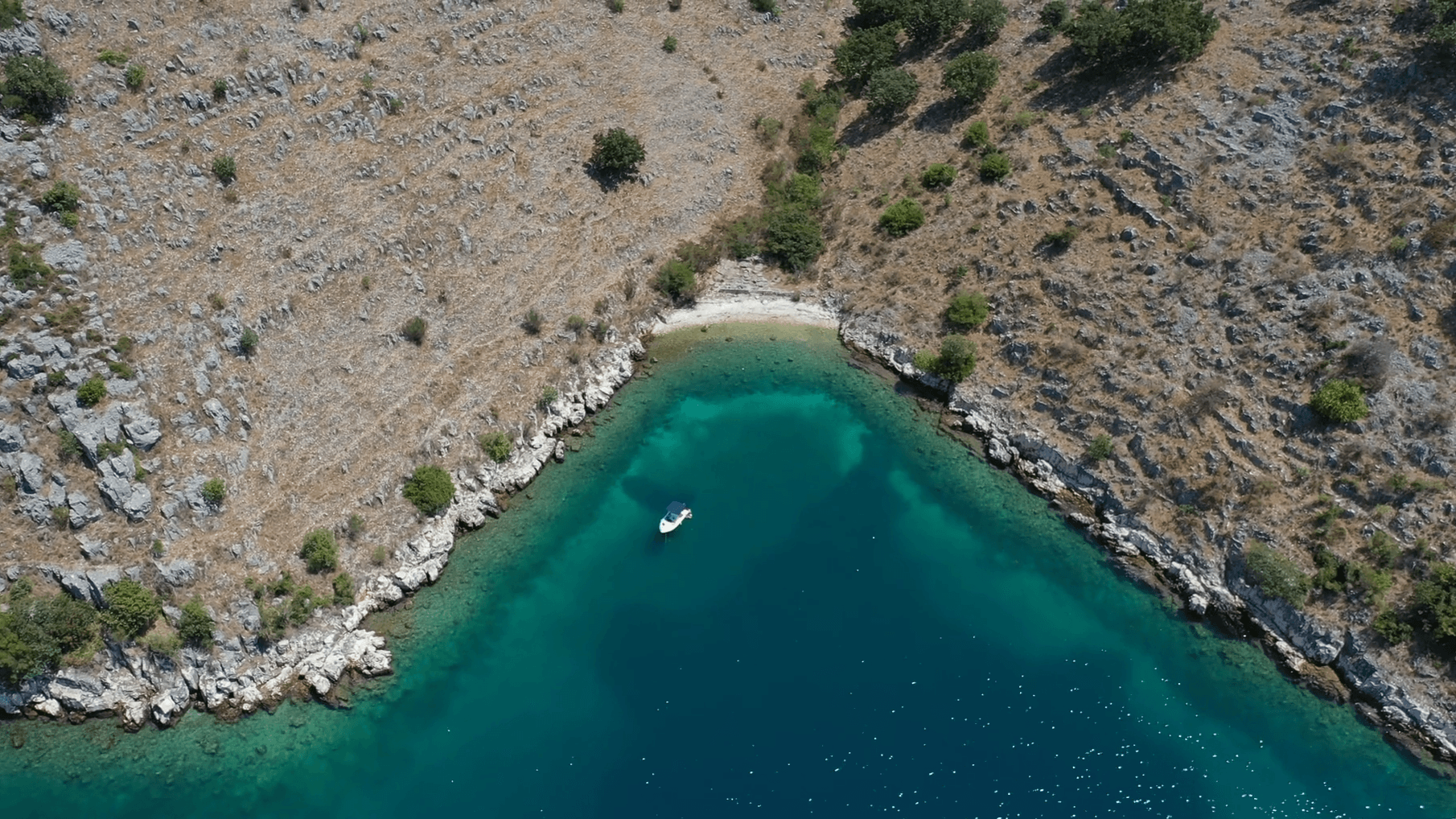
The hidden coast, captured as we found it